
What is an Audio Book?
I recommend audio books to every struggling reader I work with. Also known as “talking books,” they’re recordings of a book read aloud by a professional narrator or ensemble and are accessible on virtually any device with an internet connection, including smartphones, tablets, and computers.
Many students benefit even more from pairing audio with eyes on text: following along while listening. For this, a Kindle subscription (Amazon) or Scribd works beautifully. Kindle’s built-in dictionary lets students tap any unfamiliar word for an instant definition without leaving the page — a small feature that makes a big difference. Your local library is a strong no-cost alternative.
Find Audio Books!
Audio books are easier to access than most parents realize:
- Free through the Libby app with a local library card
- Reader’s Digest provides a list of 17 Places to Get Audiobooks for Free Online
- Audible (Amazon) — paid subscription
- Scribd — paid subscription
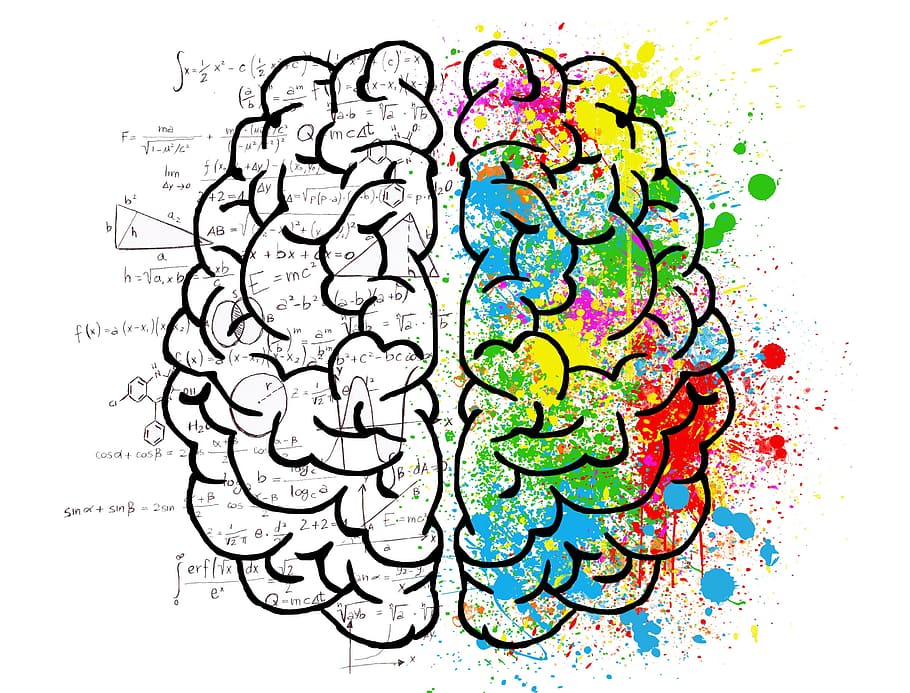
Cognitive & emotional benefits of audio books
“Listening to a captivating story takes less mental effort than reading, yet delivers the same cognitive and emotional benefits. In my experience, this makes audio books an especially powerful entry point for students who associate reading with frustration.” Laurel Sanders
Audio Books:
- Activate the imagination
- Boost vocabulary
- Improve focus and attention span
- Strengthen memory
- Support mental health by reducing negative thinking
- Build empathy
- Activate the brain’s language-processing centres
- Train the ear to hear letter sounds and the patterns that form words
- Reduce stress — students can listen while exercising, driving, or doing chore
- Reduce stress ; tudents can listen while exercising, driving, or doing chores
- Give the eyes a break from screens while still delivering rich entertainment
A word of encouragement. I worked with a Grade 6 student in the fall of 2021 who couldn’t print the alphabet or read a single word when we started. Alongside his love of video games, he always had a voracious appetite for adventure story audio books at or above his grade level. This gave him genuine social connection points with peers who didn’t struggle with reading. His vocabulary was impressive, and his ability to discriminate between sounds was strong.
That last skill, the ability to identify and manipulate individual sounds in words, called phonemic awareness, is foundational to reading success. For example, a student with strong phonemic awareness can break “map” into /m/ /a/ /p/ and correctly identify which sound changed when I say “mat,” “tap,” “tip,” or “tin.”
As with piano lessons or any skill, practice between sessions matters. Students who read at home or listen to audio books, especially in conjunction with “eyes on text,” even briefly, make measurably faster progress. “Eyes on text” refers to following the text of a book with your eyes. Matching an audio book with eyes on the physical text amplifies the benefits of listening to an audio book.
As with piano lessons or any other skill development training, reading practice at home after school and/or between tutoring sessions has a strong impact on a student’s progress. Students will see maximum progress over time if they practice reading at home between sessions.
Boosting your child’s vocabulary skills is of critical importance!
Words matter!
“A robust vocabulary improves all areas of communication — listening, speaking, reading and writing. Vocabulary is critical to a child’s success for these reasons: Vocabulary growth is directly related to school achievement. The size of a child’s vocabulary in kindergarten predicts the ability to learn to read.” | JCFS
Why Vocabulary Matters
Why Vocabulary Matters
- Comprehension: stronger vocabulary means deeper understanding of what’s read
- strengthens one’s understanding of what is read
- Academic achievement: vocabulary underpins every subject area: math, science, literature, the arts.
- Communication: students with limited vocabulary are limited in who they can connect with and what they can express in writing Expands oral and written communication
Boost Vocabulary Skills with Audio Books and Online Activities
I’ve become increasingly aware that many students not only struggle with reading; they also have weak vocabulary skills from limited exposure to spoken and written English. Audio books help, and so do targeted online activities.
A terrific free resource for building vocabulary is Vocabulary.com. Anyone can sign in with a personal email, create or use existing word lists, and track their own progress. It has an extensive database, including word lists tied to specific book titles at Vocab.com Literature Lists and a resource library at the Vocab.com Learner Resource Center.
Amplify the benefits of audio books with eyes on text
Listening to an audio book is a powerful starting point, but for struggling readers, it can’t stop there. Eyes on print is non-negotiable. Students must follow along with the text while listening, not simply sit back and absorb the story passively.
For students who have spent years missing out on reading, getting words back under their eyes is essential. This exposure rebuilds what they didn’t get earlier, and it directly supports multiple areas of literacy development at once.
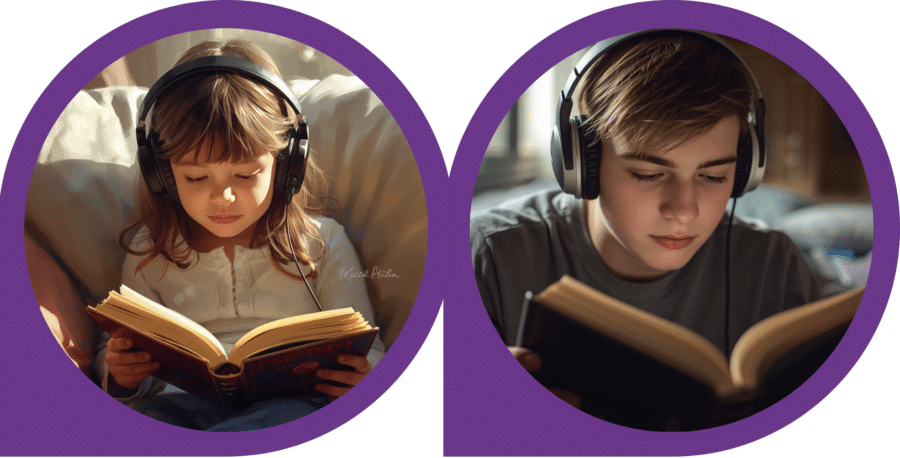
Why eyes on print matters
When a student follows the text of a book while listening to the audio version, the brain is doing remarkable work. It connects sounds to printed words in real time, absorbing spelling patterns, word shapes, and sentence structure, while simultaneously hearing fluent, expressive reading modeled by a skilled narrator. This combination allows students to process language more efficiently than either listening or reading alone could achieve.
Students gain ground in all of these areas:
- Reading comprehension
- Vocabulary growth
- Background knowledge
- Spelling patterns
- Sentence structure
- Overall language development
In short, eyes-on-print reading doesn’t just help students read more; it helps them read better, understand deeper, and build the language foundation they’ve been missing.
For students who have struggled (sometimes for years) this pairing of ears and eyes is one of the most effective tools available. It meets them where they are while actively pulling them forward.