
Sound processing and reading
Reading help for students who find sounds hard to process
Specialist 1-on-1 reading tutoring for students who struggle to hear, hold or sequence the sounds in words, including students with apraxia. We teach reading and spelling alongside your child’s speech-language pathologist.
What parents notice
When sounds are hard to sort out
Reading and spelling depend on hearing the separate sounds in a word, holding them in mind and putting them in order. Some children find that hard, whether because of apraxia of speech, a speech sound difficulty or trouble processing sounds. It shows up in reading and spelling long before anyone calls it a reading problem.
We teach reading
We teach reading and spelling. We do not diagnose or treat speech or processing conditions, and we work alongside your child’s speech-language pathologist and other supports.
Why it works
Structured practice with every sound
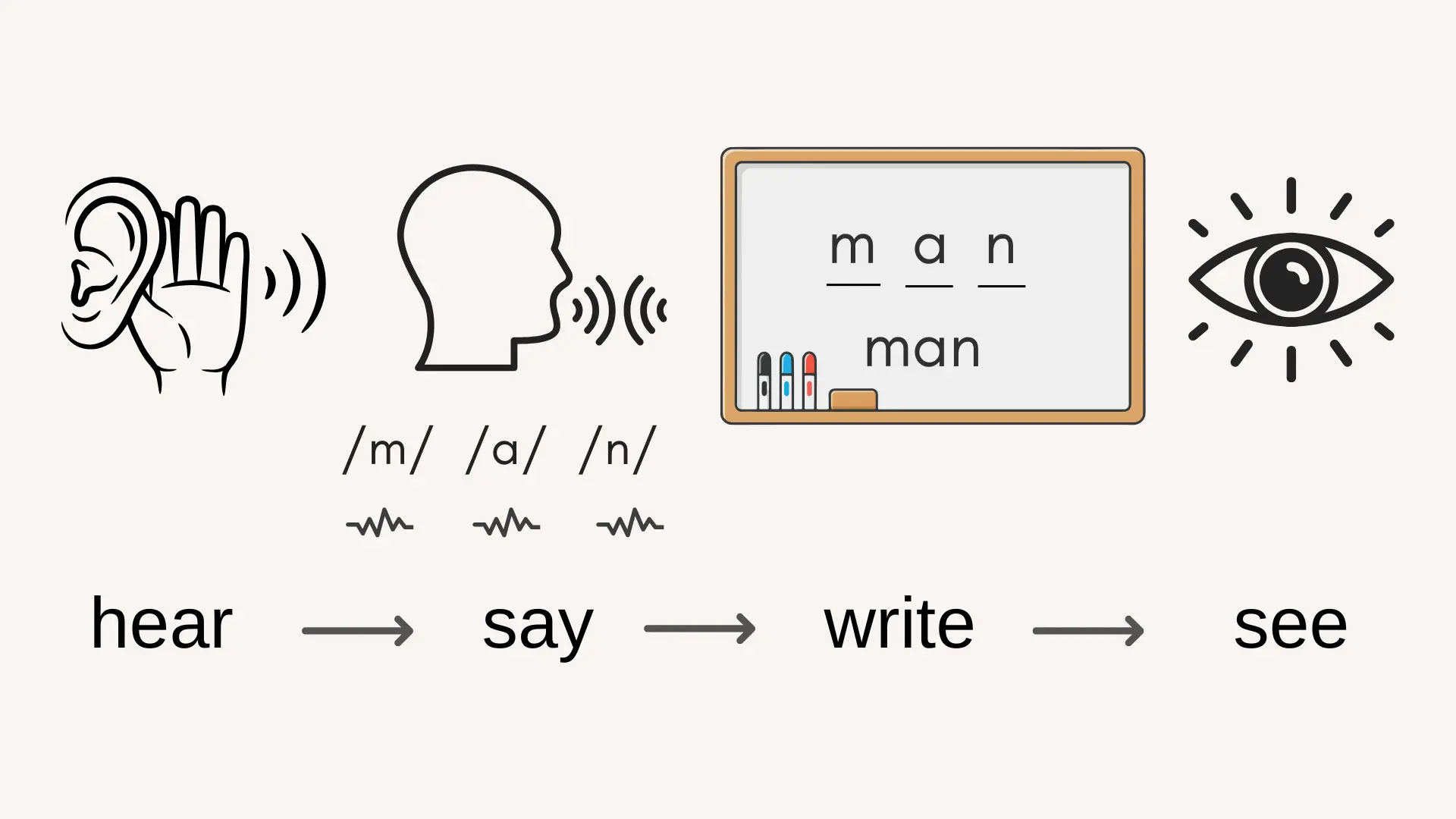
Our approach is called speech to print. Every word starts with its sounds: your child identifies each sound in a whole spoken word, matches it to the letter or letters that represent it, says each sound as they write it, then reads the word.
That routine gives repeated, structured practice in exactly the skill that is hard: hearing, saying and ordering sounds. There are no spelling or syllable rules to memorize, so effort goes into the sounds themselves.
Working together
Alongside your speech-language pathologist
Your child’s speech-language pathologist leads their speech goals. We teach reading and spelling. With your permission, your SLP can see every lesson in our Family Portal, so everyone works from the same picture.
Home
Upcoming sessions and your action items.
Reading diagnostic
The full baseline, written for parents.
Progress report
Growth, attendance and every session in full.
Resources
Practice material and set-up guides.
FAQ
Questions families ask
No. We teach reading and spelling, and we work alongside the professionals who support your child’s speech and processing.
No. A reading diagnostic shows the gaps in your child’s reading and spelling skills, but it is not a medical or psychological diagnosis.
Once or twice a week, in a standing 50-minute time slot.
Most students work with us for 1 to 2 years, with progress measured, at a minimum, at the start, middle and end.
Talk to a reading specialist
Book a free discovery call. We will listen first, then tell you honestly how we can help.