
Many children with childhood apraxia of speech also find reading and spelling hard. That is not a coincidence, and it is not a sign that they cannot learn to read well. Here is why the two are linked, and why a sounds-first approach to reading can help.
Why apraxia affects reading and spelling
Apraxia makes it hard to plan and sequence the movements for speech sounds. Reading and spelling depend on hearing, holding and ordering the sounds in words. When a child struggles to sequence sounds out loud, they often struggle to sequence them on paper too.
Why a sounds-first approach helps
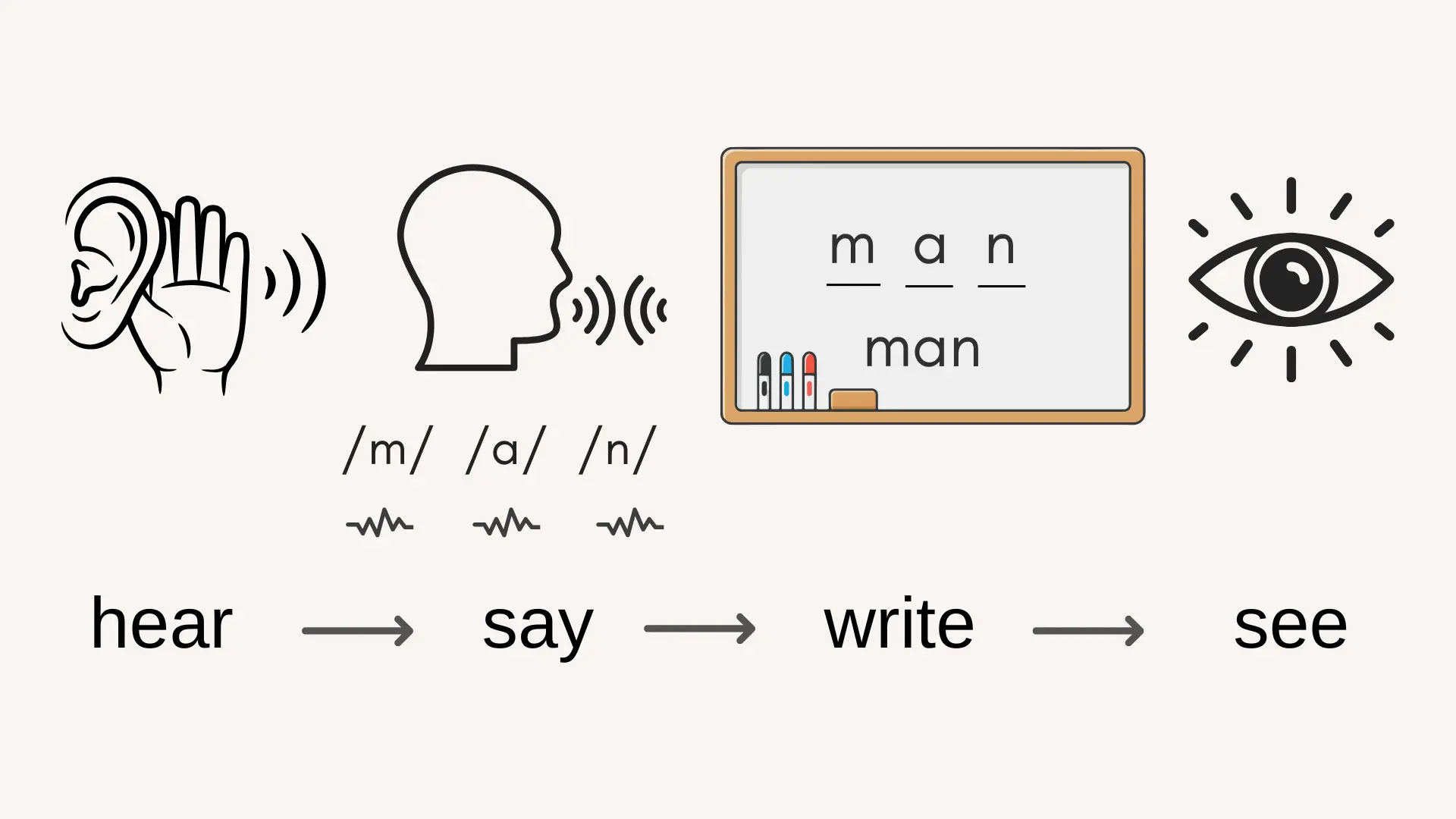
Most reading programs start with letters and ask children to turn print into sound. Speech to print does the reverse. Each lesson starts with sounds: the child hears a word, says its sounds in order, writes a spelling for each sound, then reads the word they built.
That hear, say, write and see sequence gives structured, repeated practice in exactly the skill apraxia makes hard, inside reading and spelling work.
Working alongside your speech-language pathologist
We teach reading and spelling. We do not treat apraxia. Your child’s speech-language pathologist leads their speech goals, and with your permission they can see every reading session in our Family Portal.
Signs to talk to us about
Next steps
Book a free discovery call to talk about your child, or read about our 1-on-1 reading lessons. Speech-language pathologists can learn more on our page for SLPs.